
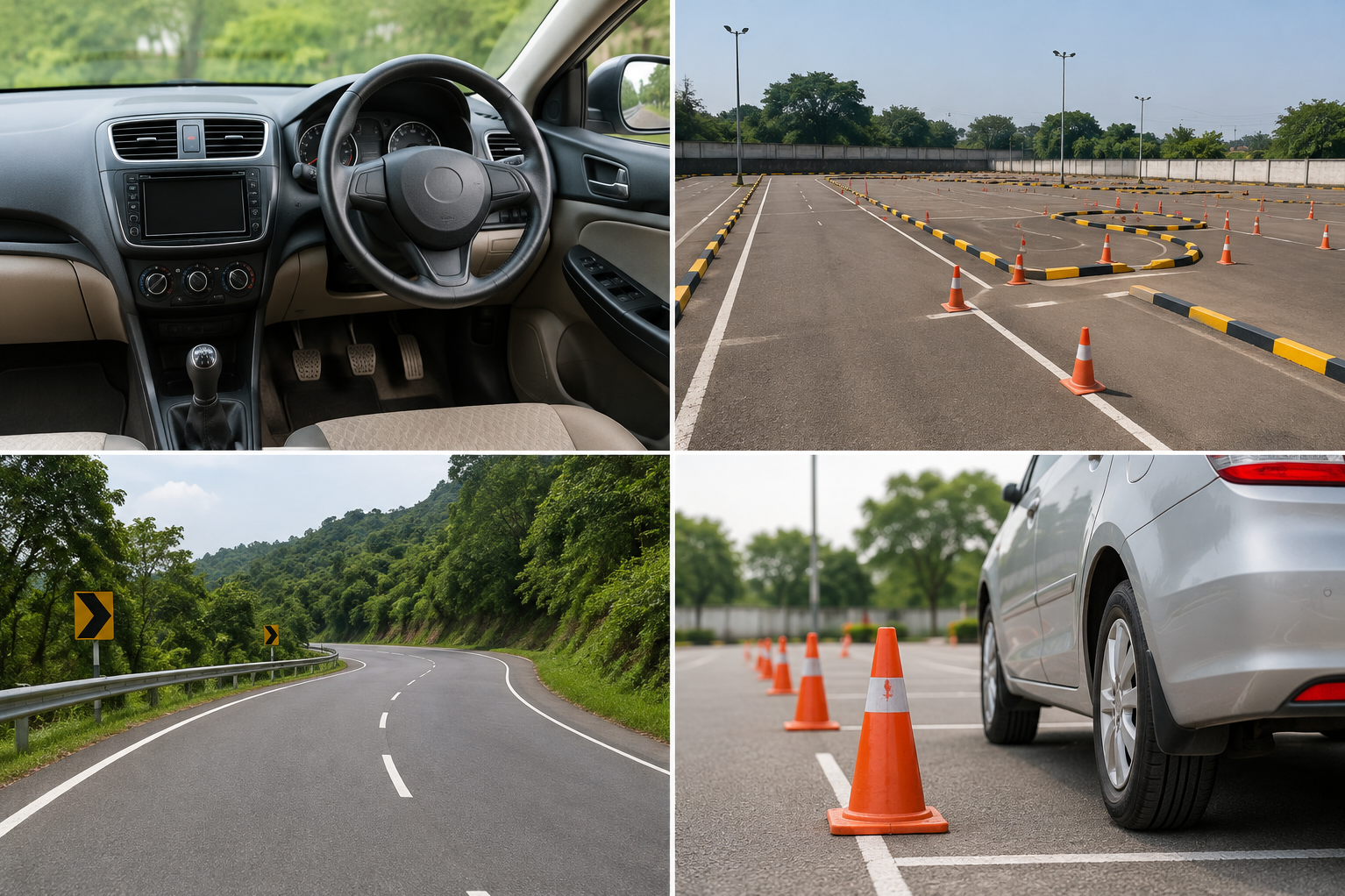
Explore the complete journey of learning car driving, from understanding vehicle controls to driving confidently with safe, structured practice.
Car Driving: Your Step-by-Step Learning Journey
Every Skilled Driver Starts with the First Lesson
Learning Car Driving is a gradual process that develops through practice, observation, and experience. Many beginners assume that driving is about controlling the steering wheel or changing gears, but the journey involves much more. A confident driver understands how to read traffic situations, anticipate hazards, make timely decisions, and adapt to changing road conditions.
Instead of trying to master everything in a few lessons, following a structured learning path allows each skill to build naturally on the previous one. Understanding this journey helps learners set realistic expectations while making steady progress.
Step 1: Understanding the Vehicle
Every learning journey begins with becoming familiar with the vehicle itself. Before driving, learners should understand the purpose of the steering wheel, pedals, mirrors, dashboard indicators, gear system, handbrake, and safety features.
This stage also introduces correct seating posture, mirror adjustment, and basic vehicle checks. Although simple, these habits improve comfort, visibility, and overall driving control from the very beginning.
Step 2: Learning Basic Vehicle Control
Once learners become comfortable inside the vehicle, attention shifts to smooth movement and control. Starting the vehicle, moving off safely, stopping gradually, steering accurately, and maintaining a steady speed become the primary focus.
At this stage, mistakes are expected. Repeating these basic actions helps develop coordination until operating the vehicle becomes more natural and requires less conscious effort.
Step 3: Developing Road Awareness
Driving is not only about controlling a car—it is also about understanding everything happening around it.
Learners gradually develop the ability to observe traffic signs, monitor mirrors regularly, judge safe distances, recognise pedestrian movement, and respond appropriately to other road users. These observation skills form the foundation of defensive driving and improve decision-making in everyday situations.
Step 4: Practising Different Driving Conditions
Once the fundamentals become comfortable, practice expands to include a variety of road environments. Each setting introduces new learning opportunities and helps learners adapt their driving style accordingly.
- Residential roads with slower traffic
- Busy streets with frequent intersections
- Highway and expressway driving
- Parking areas and reversing practice
Experiencing different conditions prepares learners for situations they are likely to encounter after receiving their licence.
Step 5: Refining Everyday Driving Skills
As confidence grows, learners begin focusing on techniques that improve both safety and efficiency. Smooth lane changes, proper signalling, controlled braking, parking accuracy, and hazard anticipation become increasingly important.
Rather than memorising specific routes, learners develop judgement that can be applied wherever they drive. This flexibility makes driving safer and reduces dependence on familiar roads.
Step 6: Building Confidence Through Consistency
Confidence is often misunderstood as fearlessness. In reality, confident drivers are those who understand their responsibilities, remain alert, and make calm decisions under different road conditions.
Regular practice strengthens muscle memory while reinforcing safe habits. Over time, learners stop thinking about every individual action and begin focusing more on the overall driving environment.
Om Sai Motor Driving Training School follows a structured learning approach that encourages learners to progress through each stage systematically, allowing practical experience and road safety principles to develop together.
A Simple Learning Reminder
Progress in Car Driving is not measured by how quickly someone finishes lessons but by how consistently safe habits are practised. Every session adds another layer of experience, helping learners become more aware, more confident, and better prepared for everyday driving.
Every Step Builds a Better Driver
Learning Car Driving is a journey rather than a single achievement. Beginning with vehicle familiarisation and progressing through road awareness, practical driving, and real-world decision-making creates a stronger foundation for lifelong safe driving. A step-by-step learning process allows beginners to gain confidence naturally while developing the skills needed to handle different driving situations responsibly.
4 Signs You're Ready to Start Car Driving Training
Wondering if you're ready for car driving training? Explore the signs that show you're prepared to learn safely and build confidence on the road.
Signs You're Ready to Start Car Driving Training
Learning Starts with the Right Mindset
Beginning Car Driving Training is an exciting step, but many people hesitate because they believe they need confidence or previous experience before enrolling. In reality, every skilled driver once started as a complete beginner. The difference lies not in what someone already knows, but in their willingness to learn, practise consistently, and develop safe driving habits over time.
Rather than asking, 'Can I drive already?' a better question is, 'Am I ready to learn?' If the answer is yes, you're already closer to becoming a confident driver than you might think.
Sign 1: You Observe the Road Even as a Passenger
One of the earliest signs of readiness is paying attention while travelling with someone else. If you naturally notice traffic signals, lane markings, speed limits, or how drivers respond to different situations, you're already developing road awareness.
Observation is one of the most valuable driving skills because it helps you recognise situations before you need to react to them.
Sign 2: You're Comfortable Learning Something New
Driving combines physical coordination with quick thinking. Beginners don't need to know every traffic rule or vehicle control beforehand, but they should be open to learning through practice and feedback.
Approaching lessons with patience instead of expecting instant perfection makes the entire learning process more enjoyable and productive.
Sign 3: You Understand That Practice Builds Confidence
Many learners believe confidence comes first, but it actually develops after repeated practice. Every lesson improves familiarity with the vehicle, strengthens observation skills, and makes decision-making more natural.
Progress often happens gradually, with each session adding another layer of experience until driving becomes increasingly comfortable.
Sign 4: You Value Road Safety
Safe driving begins with the right attitude. If you understand that following traffic rules, maintaining safe distances, and respecting other road users are essential responsibilities, you're developing the mindset needed for responsible driving.
Learning techniques is important, but learning when and why to apply them is what creates safer drivers.
Sign 5: You Want More Than Just a Driving Licence
A driving licence is an important milestone, but practical driving skills remain valuable long after the test is complete. Learners who focus on understanding different road conditions, parking techniques, hazard awareness, and defensive driving are often better prepared for everyday situations.
Developing these abilities takes time, but they make driving more predictable and less stressful.
A Few Questions to Ask Yourself
- Do I stay attentive when travelling on the road?
- Am I willing to practise regularly instead of rushing the learning process?
- Can I accept mistakes as opportunities to improve?
- Do I understand that safe driving requires continuous learning?
If your answer is 'yes' to most of these questions, you're likely ready to begin Car Driving Training.
Expert Insight
Learning progresses differently for everyone. Some people become comfortable behind the wheel within a few lessons, while others need additional practice. Consistency is far more important than speed, as steady improvement creates stronger driving habits over time.
Om Sai Motor Driving Training School follows structured training practices, including the Standard Operating Procedures (SOPs) introduced by the Transport Department of Uttar Pradesh, helping learners build practical skills through a systematic and safety-focused approach.
Ready When You Are
Starting Car Driving Training is less about having experience and more about having the willingness to learn. Curiosity, patience, regular practice, and a safety-first mindset create the foundation for confident driving. When these qualities are supported by structured instruction, learners develop skills that extend far beyond passing a driving test, preparing them for everyday driving with greater awareness and responsibility.