
Compare Light Motor Vehicle Training with self-learning to understand which approach helps build safer driving habits and long-term confidence.
Light Motor Vehicle (LMV) Training vs Self-Learning: Which Is the Better Choice?
Two Ways to Learn, One Goal
When someone decides to learn how to drive a car, one of the first questions that comes up is whether professional Light Motor Vehicle (LMV) Training is necessary or if learning from a family member or friend is enough. Both approaches can help a beginner become familiar with a vehicle, but they differ significantly in the way driving skills are developed.
While informal learning may seem convenient, structured training focuses on building safe habits, improving road awareness, and preparing learners for a variety of real-world driving situations. Understanding these differences can help beginners choose a learning method that matches their long-term goals rather than just helping them move a vehicle.
Comparing the Learning Experience
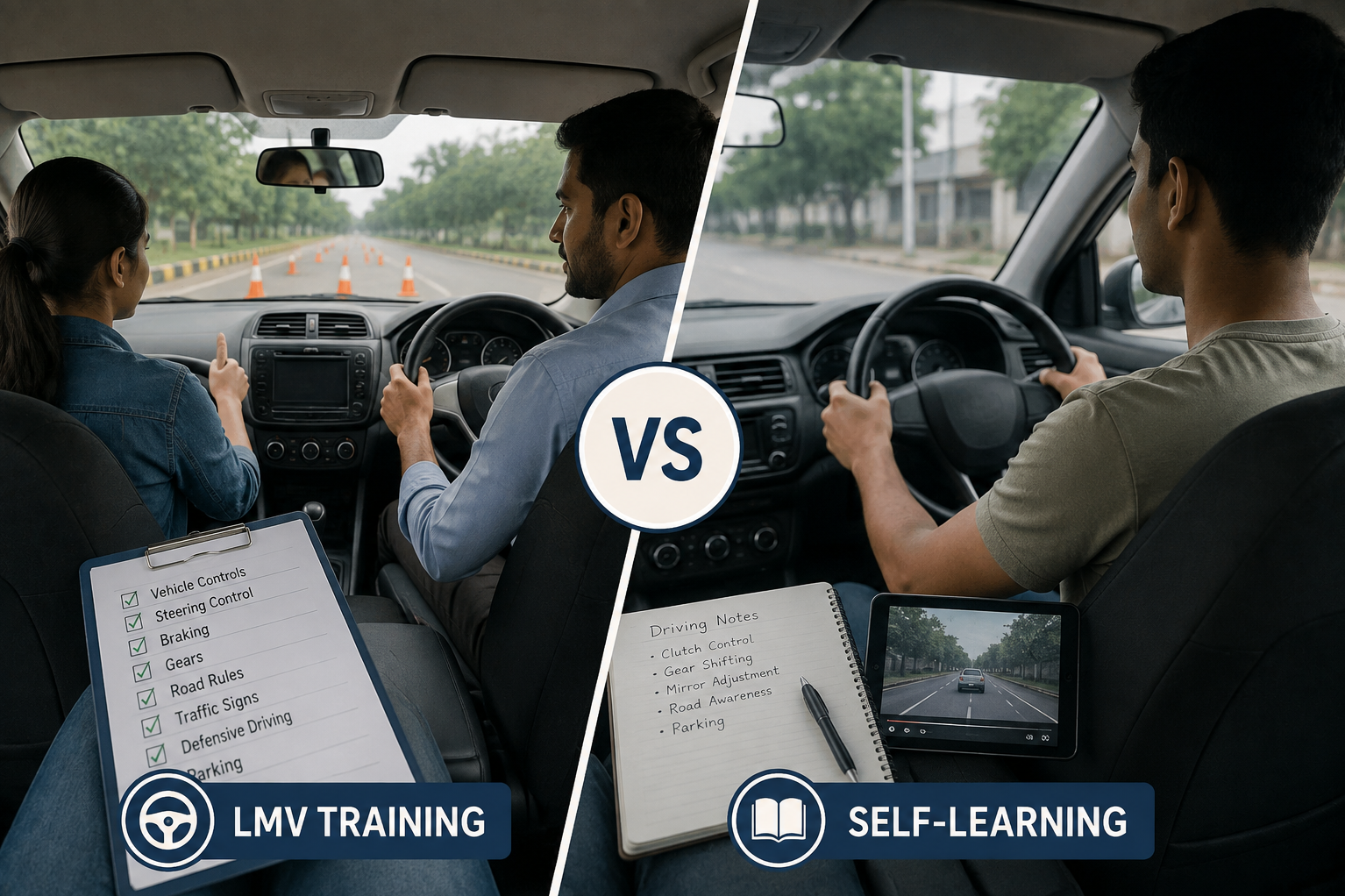
A learner practising with a family member often receives guidance based on personal driving experience. Although this can be helpful, the teaching process usually depends on individual habits, available time, and familiar routes. Lessons may not always follow a structured progression, making it difficult to identify and correct mistakes consistently.
In contrast, Light Motor Vehicle (LMV) Training follows a planned sequence. Beginners first learn vehicle controls, basic manoeuvres, and road rules before gradually moving to more complex situations such as city traffic, parking, highway driving, and defensive driving techniques. Each lesson builds upon previous learning, making progress more systematic.
Understanding Road Safety
One of the biggest advantages of structured training is its emphasis on road safety. Learning to drive is not limited to steering, braking, or changing gears. It also includes understanding traffic regulations, recognising hazards, maintaining safe distances, and making informed decisions under changing road conditions.
Professional instruction encourages learners to develop observation skills that become valuable throughout their driving journey. These habits are often introduced from the first lesson, helping learners avoid unsafe practices before they become routine.
Receiving Consistent Feedback
Feedback plays an important role in skill development. During informal practice, mistakes may go unnoticed simply because the focus is on completing the drive. Structured lessons, however, provide continuous guidance that helps learners understand not only what needs improvement but also why a particular technique is more effective.
Correcting small mistakes early can prevent them from becoming long-term habits that are difficult to change later.
Building Confidence Through Experience
Confidence develops when learners experience different driving environments rather than repeatedly practising on familiar roads. Exposure to varying traffic conditions, parking situations, intersections, and road layouts improves adaptability and decision-making.
- Structured practice strengthens observation and judgement.
- Gradual progression reduces hesitation in unfamiliar situations.
- Repetition helps develop smoother and more controlled driving habits.
- Guidance encourages safer responses to changing traffic conditions.
These experiences contribute to practical confidence instead of overconfidence.
Looking Beyond the Driving Test
Many beginners focus only on obtaining a driving licence, but everyday driving presents situations that extend far beyond the examination route. Learning how to remain calm during unexpected events, communicate with other road users, and respond responsibly requires continued practice and guidance.
Om Sai Motor Driving Training School follows structured learning practices that align with current safety expectations, allowing learners to develop practical driving skills through organised instruction rather than relying solely on trial and error.
Choosing the Approach That Fits You
Both informal learning and Light Motor Vehicle (LMV) Training can introduce someone to driving, but their outcomes are often different. Self-learning may provide basic familiarity with a vehicle, while structured training develops broader skills such as road awareness, defensive driving, safe decision-making, and consistent driving habits. For beginners who want to build confidence that lasts well beyond the driving licence, learning through a systematic approach offers a stronger foundation for safe and responsible driving.